DuoRhythmo
A collaborative musical experience for people living with ALS, played with eye-tracking
- Company
- Microsoft Research
- Role
- Leading interaction design
- Years
- 2022
- Scope
- User research, Interaction design, Visual design
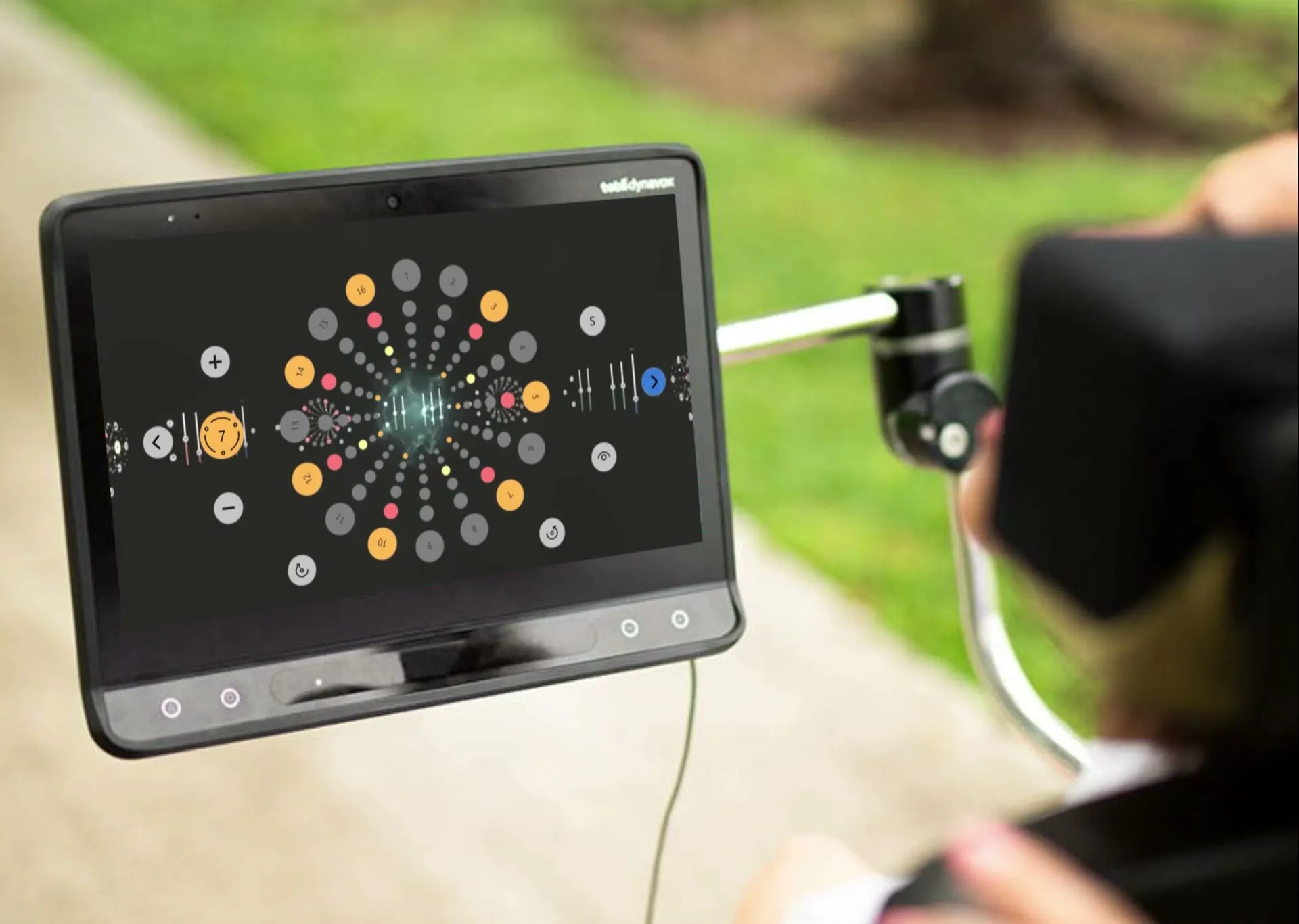
We created DuoRhythmo, a collaborative musical experience for people living with ALS. Focusing on eye-tracking as an input, we designed the interface to be inclusive from the get-go and continuously iterated on it together with members of the ALS community, their caretakers and other stakeholders. My role was leading the interaction design in our team.
The project started as my Bachelor thesis in collaboration with Microsoft Research, and I kept coming back to it, first during my Master’s, then as a side project. It’s available in the Microsoft Store.
- usability rating from people with ALS after the final testing
- 79.5 / 100
- paper presented in Hamburg
- CHI 2023
Why
As ALS progresses, people gradually lose their skills, and often they don’t have tools for self-expression. Many people living with ALS (PALS) used to be professional musicians and can’t share the joy of musical co-creation anymore. Through interviews with the ALS community we learnt that as their condition progresses, they engage less in social activities.
Our goal was to enable people with ALS to connect online through the power of music, to fight loneliness and depression, without needing any prior musical expertise.
Design
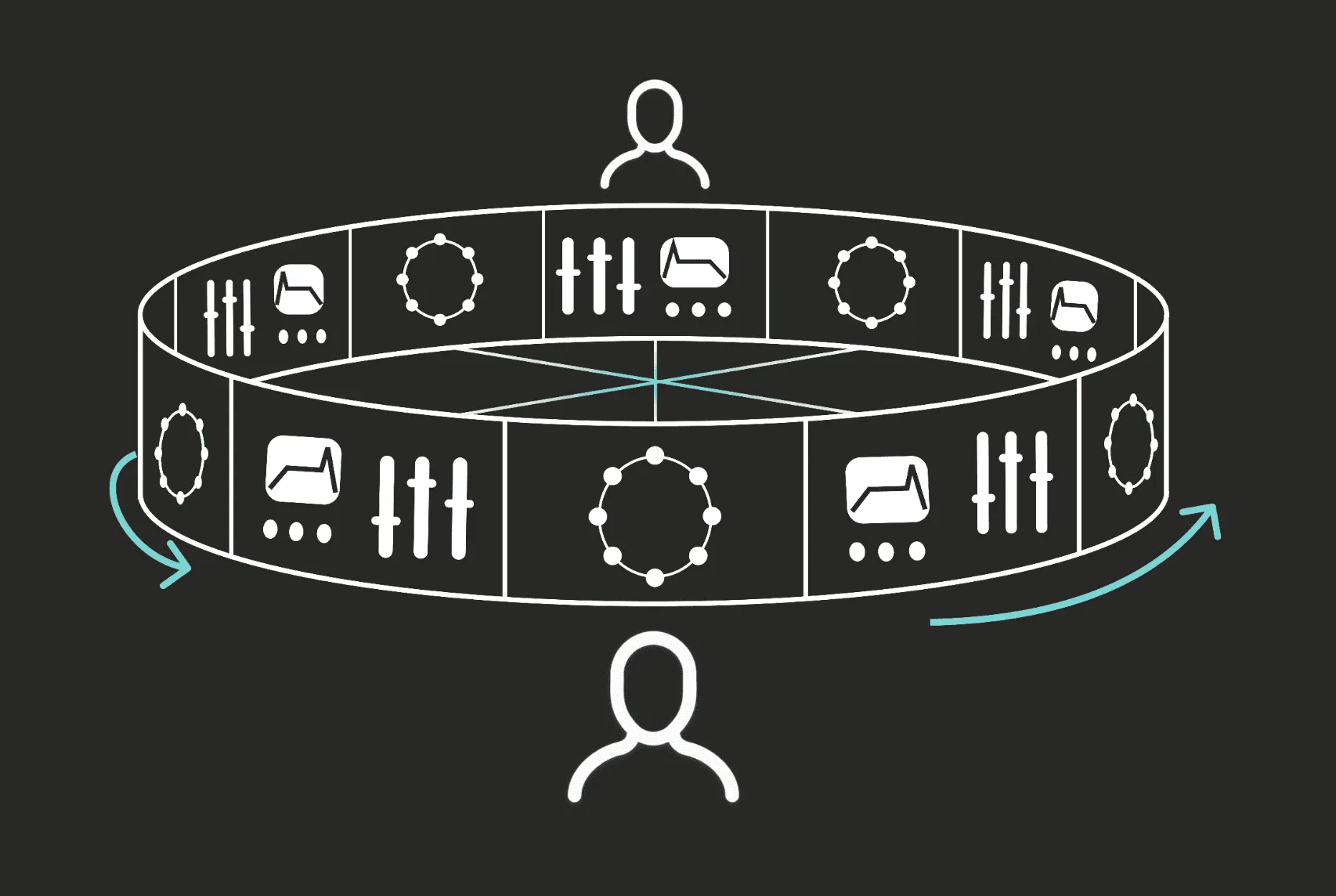
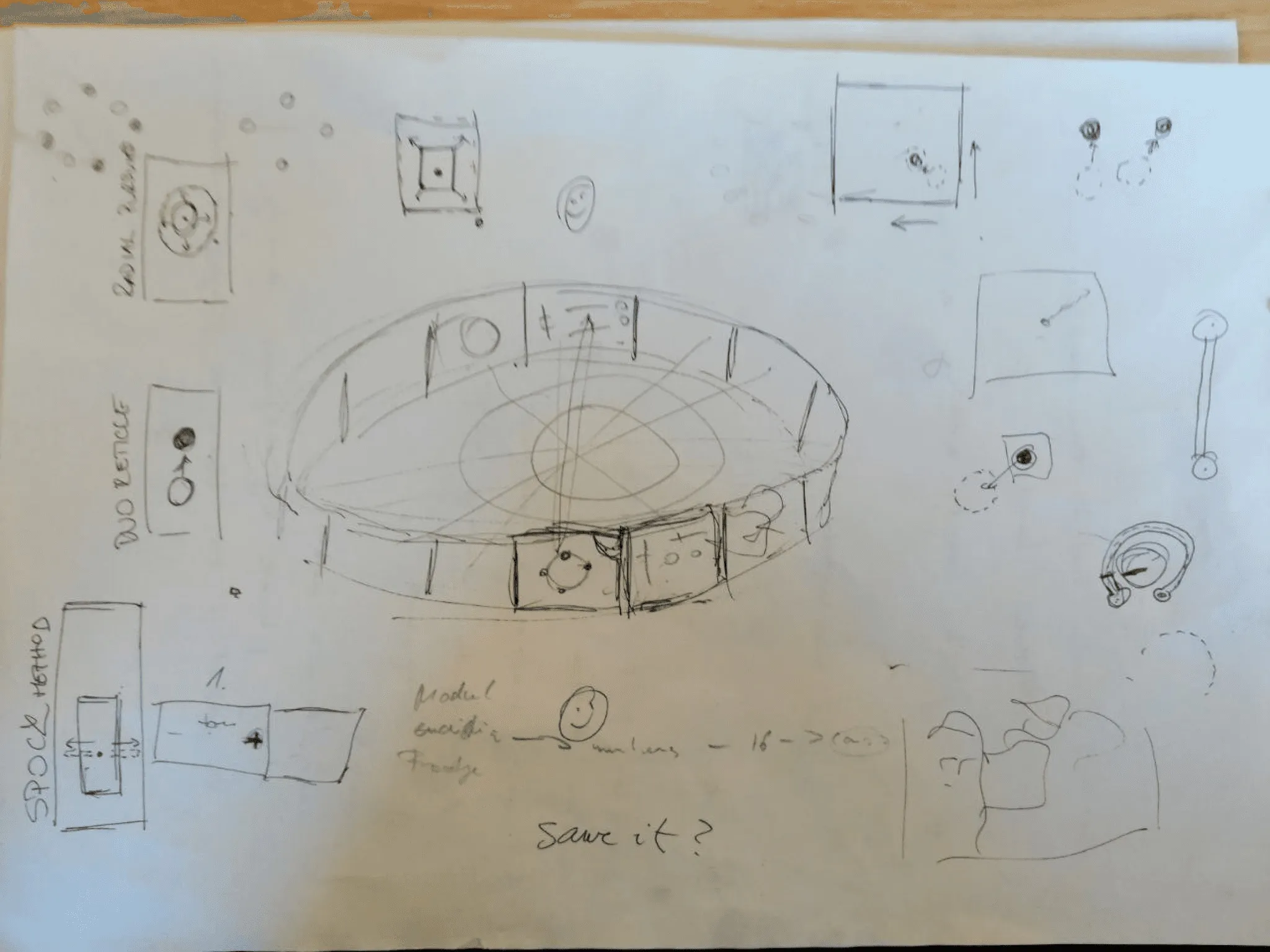
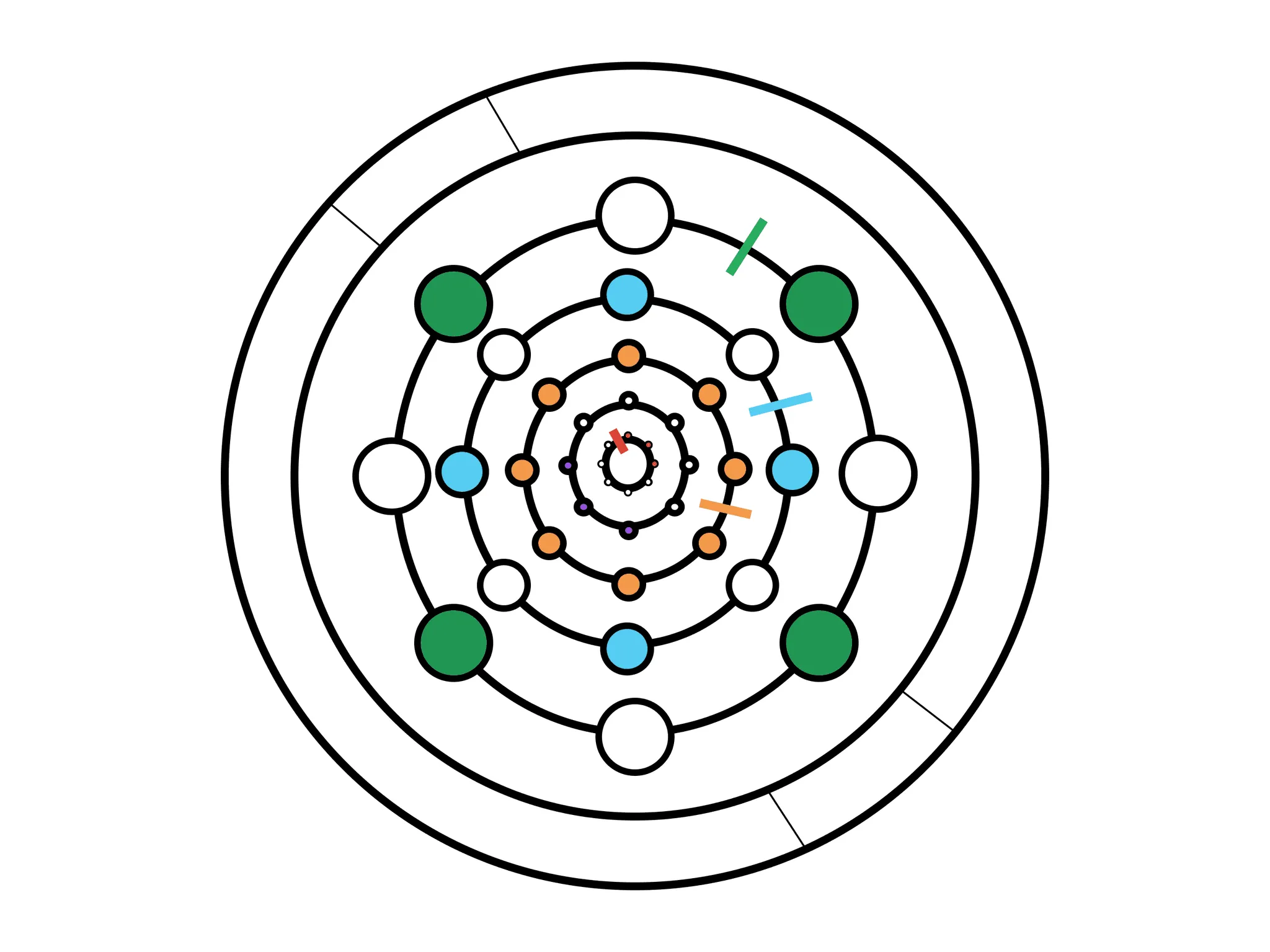
Collaboration metaphor. We took inspiration from the Dato Duo synth and came up with a spatial carousel between the two players. One player places beats on a sequencer, while the other modulates the beats with different effects at the same time. After a certain time the carousel rotates and the roles are swapped.
Radial UI. From the beginning we decided to design a radial UI with a resting position in the middle. This way we could minimise the time and effort to select UI elements with an eye-tracker, in accordance with Fitts’s Law.
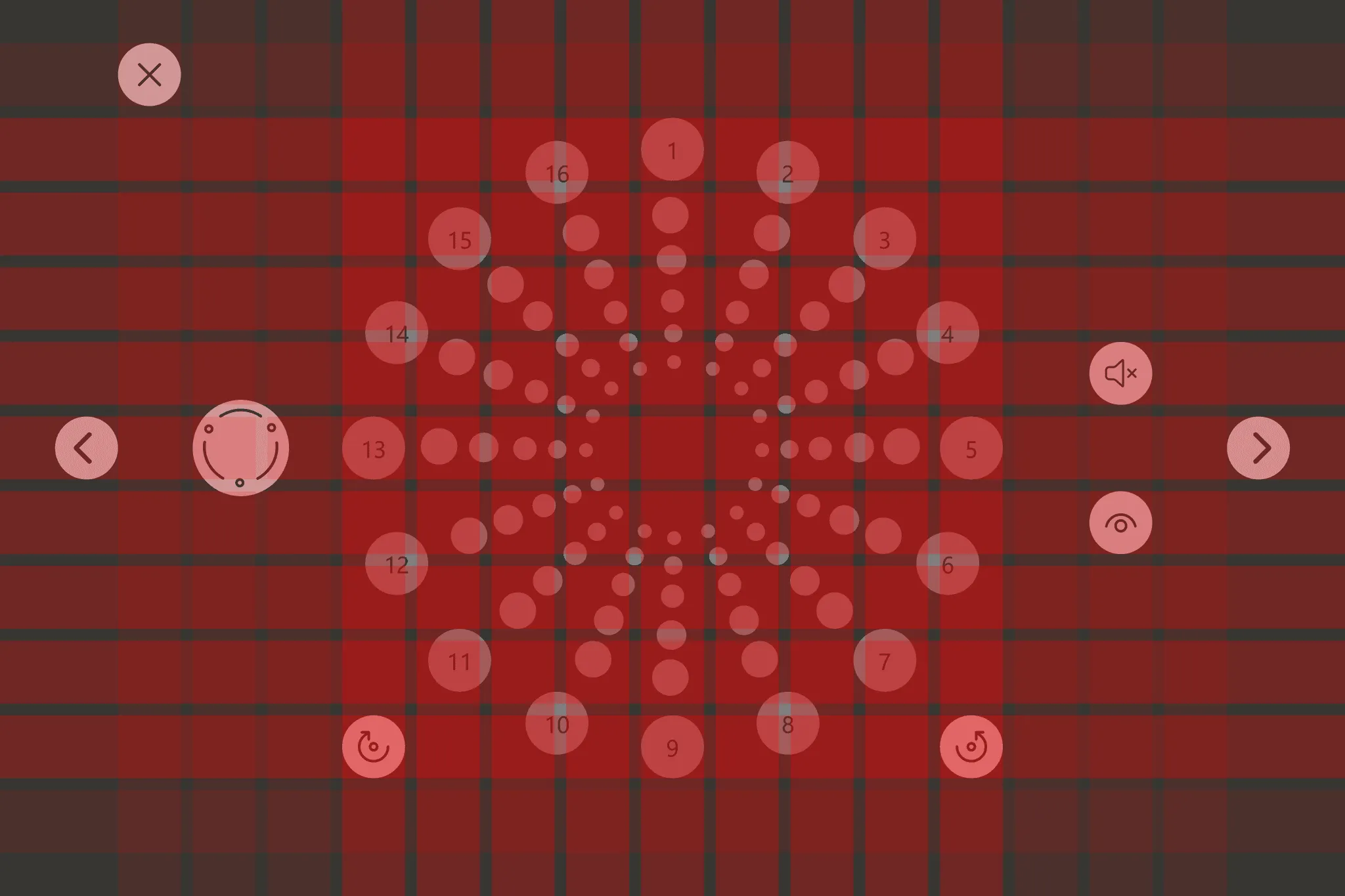
Grid for eye-tracking. We built the interface on squares of 128×128 pixels, as the minimum target size for eye-trackers is 100×100. Eye-trackers tend to work less accurately towards the edges of the screen, so we kept the middle for the most important interactions and the sides for system control.
Modular input system. Through a lot of interviews with the ALS community we found out that we needed a modular input system which follows the progression of ALS.
Accessible colour palette. The colours were carefully chosen not to fatigue our users’ eyes: a palette of pastel red, green, yellow, orange and light blue with low radiance.
Testing
We evaluated DuoRhythmo in multiple steps and improved it iteratively based on the results, using both qualitative and quantitative methods.
With able-bodied participants it scored 63.8 / 100 on the System Usability Scale, and we A/B tested two slider designs and two input methods. With some adjustments, we improved the usability benchmark to 79.5 in the final testing with PALS.
“Fun, empowering, accessible, easy to use, engaging, stimulating” were the most common words PALS picked from the reaction cards. They also reported high-level empathy towards the other player, no negative feelings and active involvement during the jam sessions.
Impact
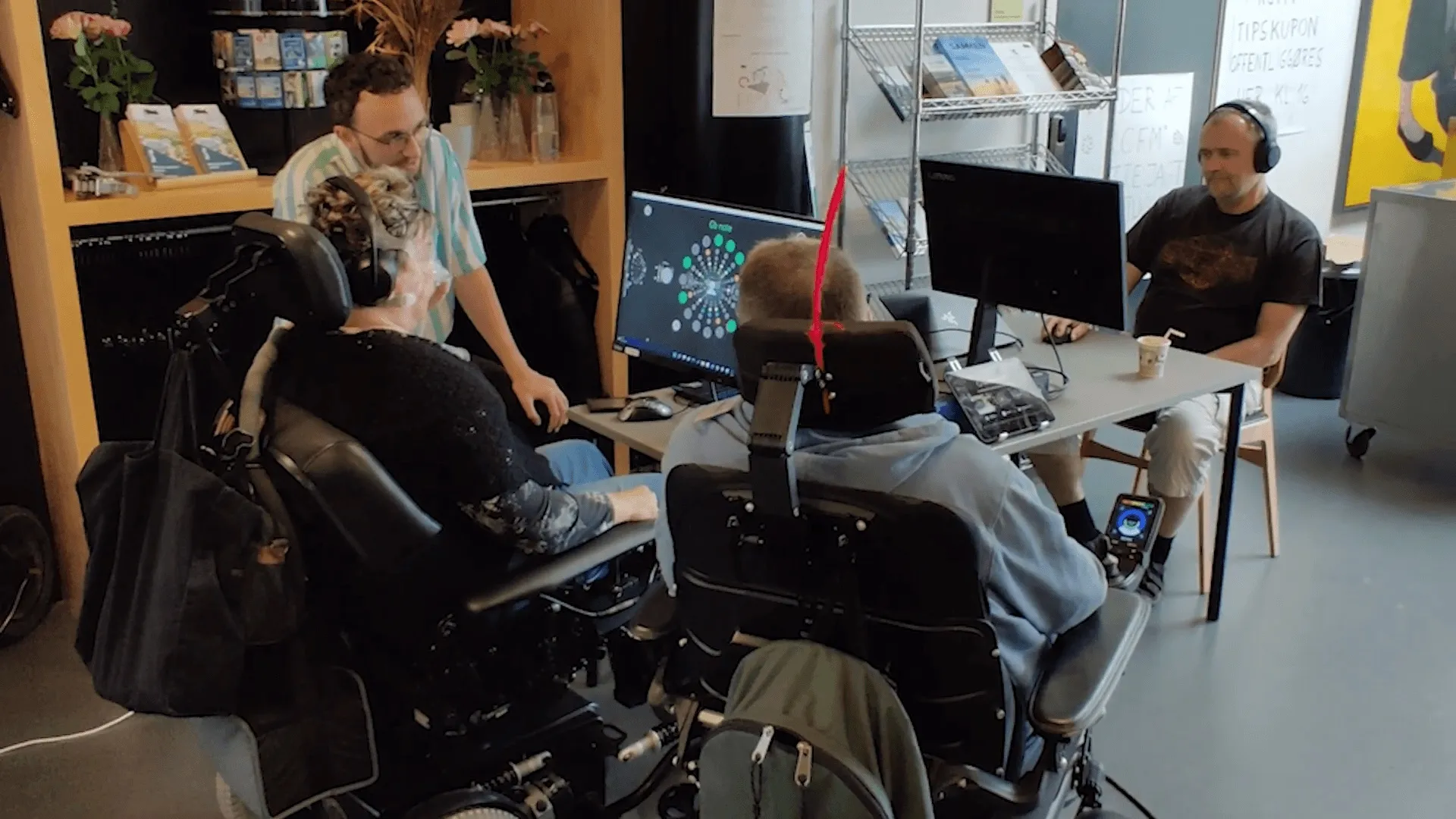
DuoRhythmo still rocks, and PALS can just jam together whenever they want. Since the soft release we have some constant happy users. We also published articles, got featured on blogs, and I spoke at multiple conferences sharing our journey:
- An article on the Windows Blog with some cool words from the legendary Bill Buxton
- A guest talk at Stanford University as part of the course Music, Computing, Design (CS476a)
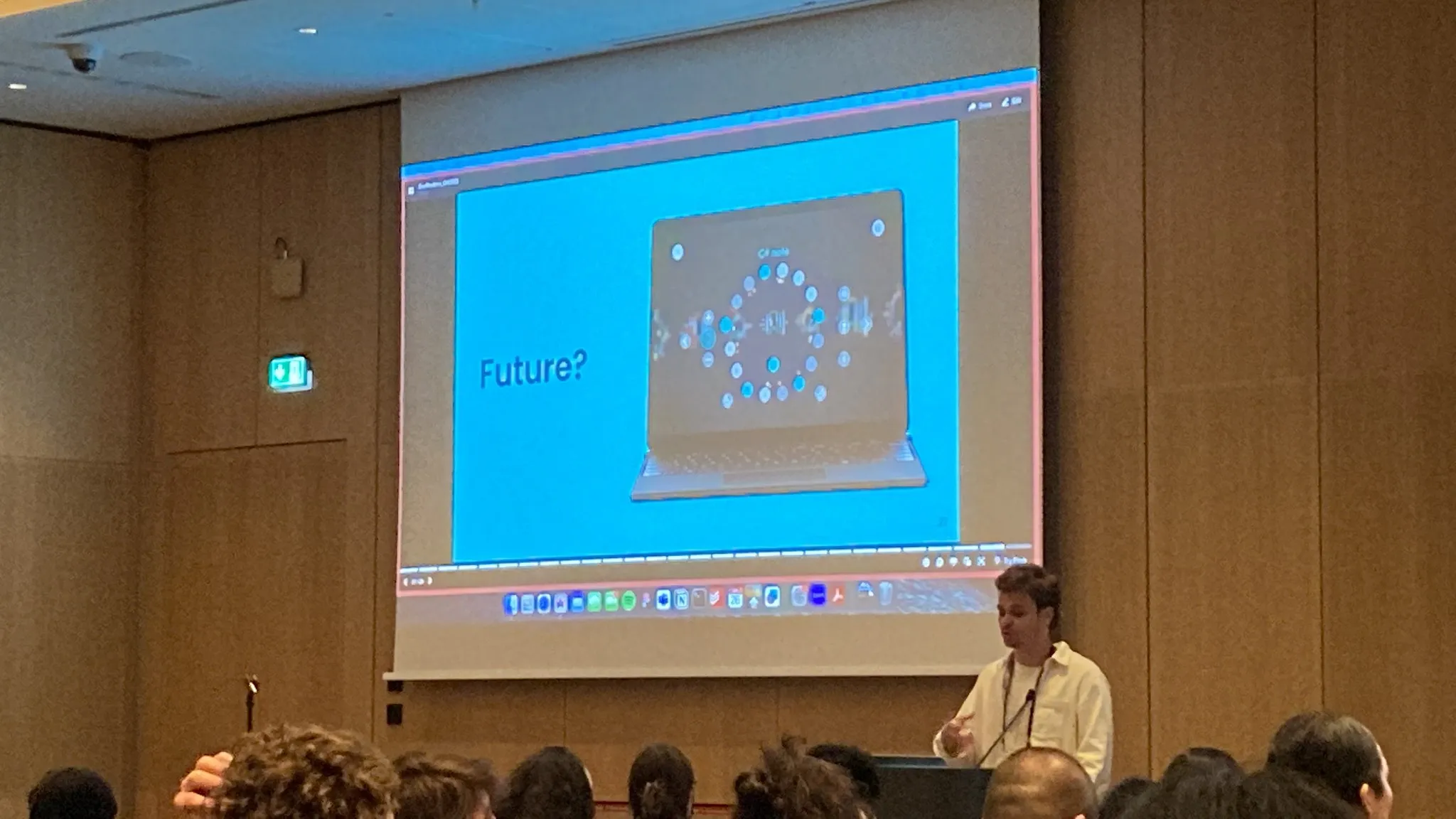
- Presenting DuoRhythmo at CHI 2023 in Hamburg